


Your cart is currently empty!
A Glass of Baijiu, A Lesson in Culture: Sinocan Supply Inc. Sponsors Baijiu Masterclass at TOCC 2026
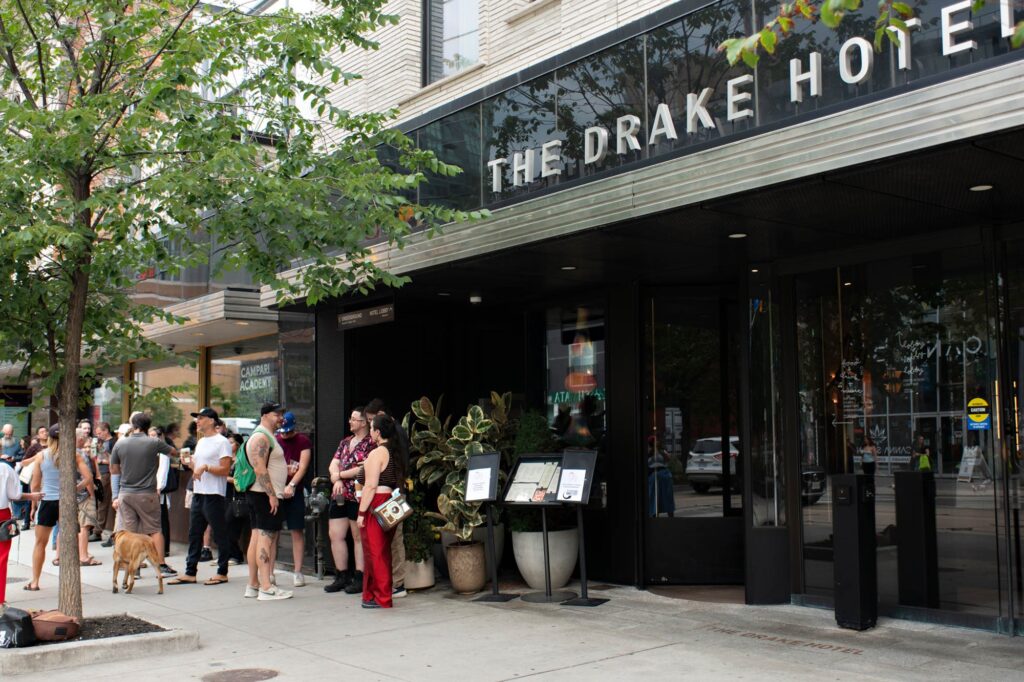
The Toronto Cocktail Conference 2026 (TOCC 2026) took place at the Drake Hotel in Toronto on August 10–11, 2026. As an international drinks event centred on education and industry exchange, this year’s TOCC brought together Canadian and international drinks professionals, bartenders, brand representatives and enthusiasts, continuing to broaden the exchange of global spirits culture through a series of seminars.
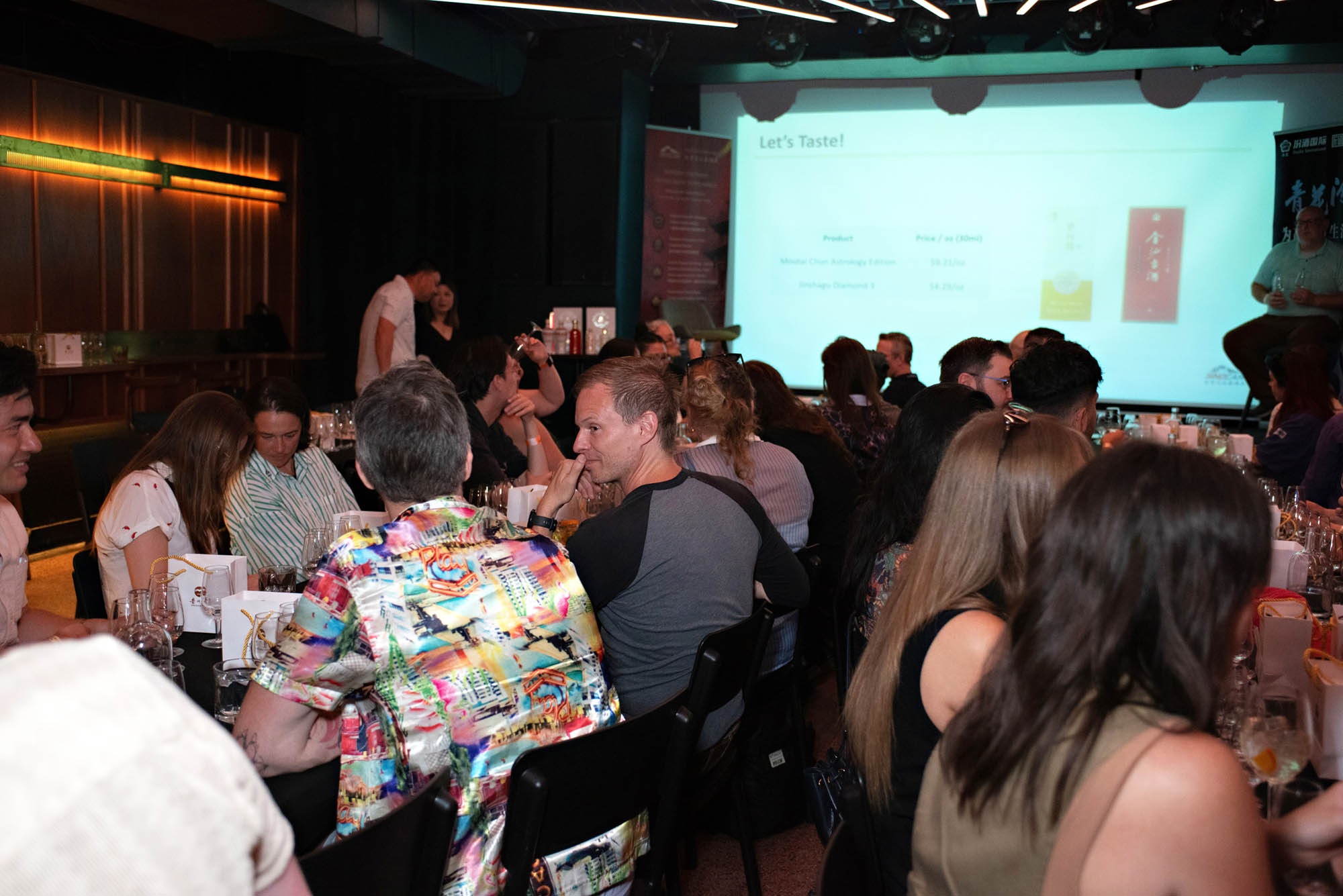
At the event, Sinocan Supply Inc. served as sponsor of the baijiu-themed masterclass, providing a range of baijiu styles as comparative tasting samples — including Moutai Chun Constellation Edition, Dukang Mianrou 3-Star and Jinsha Gu Wine Diamond 3-Star. By tasting the samples side by side, guests could feel that price range, brand expression and body style are not simply linear — a good baijiu is about complete structure, a clear personality and a pleasing finish.
Education has always been a cornerstone of TOCC. Across the two days, the conference hosted 12 seminars; the baijiu masterclass combined classroom-style exchange with guided tasting, unfolding amid professional glassware, tasting mats and a clear teaching rhythm. Through this international platform, Sinocan Supply Inc. hopes more North American drinks professionals will stop seeing baijiu merely as an unfamiliar “high-proof spirit” and instead understand it as a complex culture shaped by grain, microbes, time, craft and terroir.
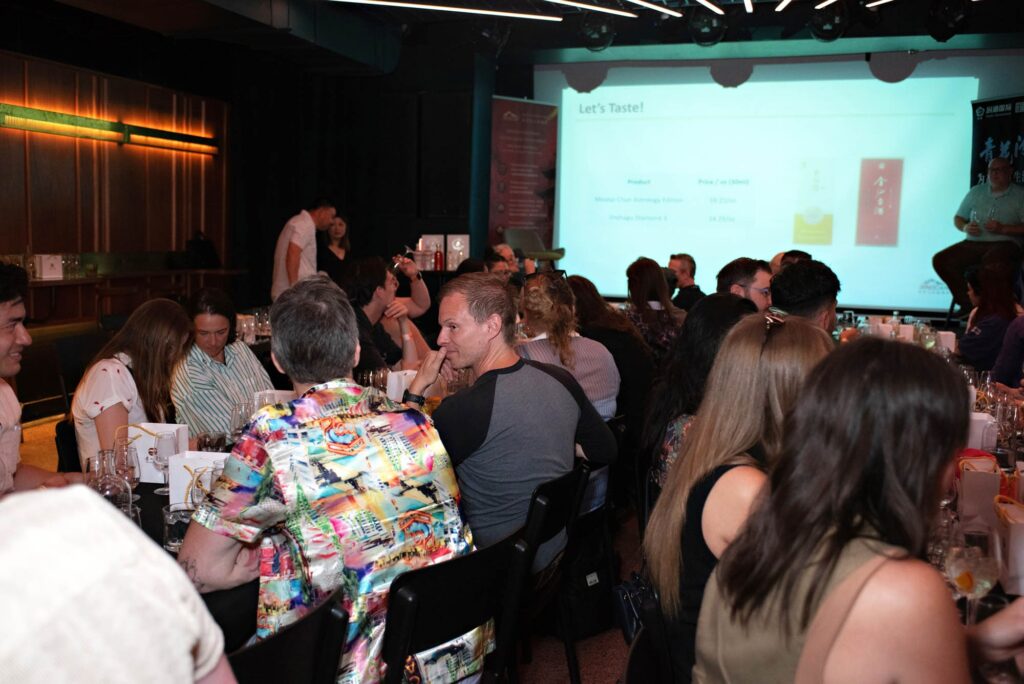
The instructor traced baijiu’s ingredients, qu-making, fermentation, distillation, ageing, blending and tasting methods, guiding guests from “what is baijiu” to deeper questions: what brand reputation, market demand, ageing and inventory, process complexity, the distiller’s skill, the quality of grain and qu, and accumulated traditional craft mean to a bottle of baijiu. Promoting baijiu culture is not about the novelty of alcohol strength, but about respect for flavour, craft and drinking etiquette — we hope guests can savour baijiu’s unfolding layers of aroma and texture at a fitting pace.
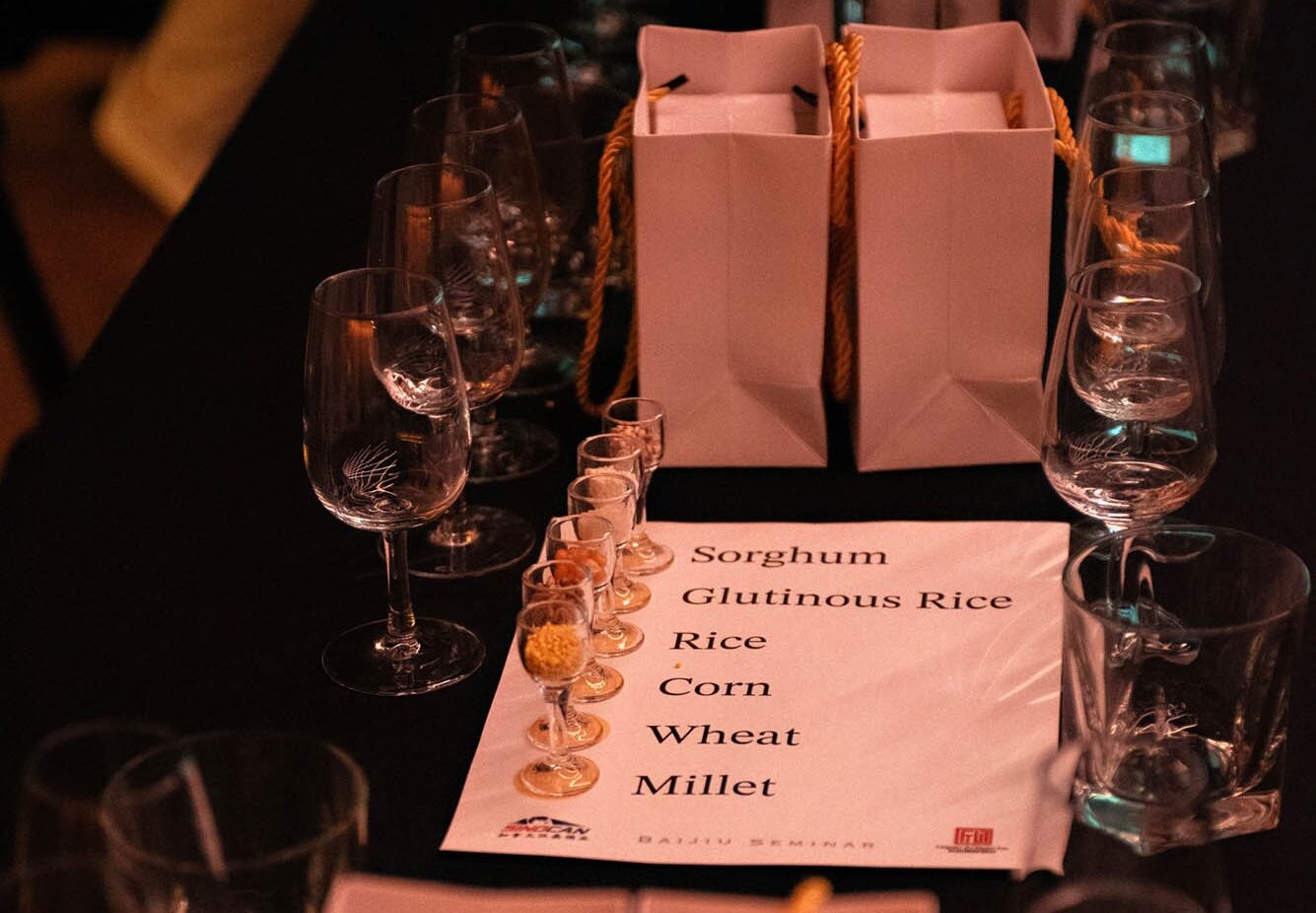
The class began with brewing ingredients. Sorghum, wheat and other grains used in baijiu-making were displayed on site, so participants could start from what they could see and touch. For baijiu, grain is not just the source of alcohol — it determines the body’s foundation, the direction of aroma and the frame of mouthfeel. Choices of grain, how it is treated, and how it works with qu all leave their mark on the final flavour.
The class then followed five stages — grain steaming, fermentation, distillation, ageing and blending — to map baijiu’s complete journey from grain to glass. Compared with the production logic of Western spirits familiar to many guests, Chinese baijiu’s complexity lies above all in qu-making and solid-state fermentation. Qu is often called the “magic ground” of baijiu brewing: yeasts and microbes work together, gradually transforming grain into rich, three-dimensional aroma and mouthfeel. It is this multi-microbe collaboration that gives baijiu its intricately layered, ever-changing flavour expression.
Explaining why baijiu “smells and tastes so different”, the course further connected aroma styles with brewing paths. Baijiu’s styles are not singular but built layer by layer — from grain, qu, fermentation vessels and time, to distillation and blending. For many overseas guests encountering baijiu systematically for the first time, this section built a “flavour map”: baijiu is not only intense or fiery; it also spans dimensions of delicacy, mellowness, elegance, brightness and length.
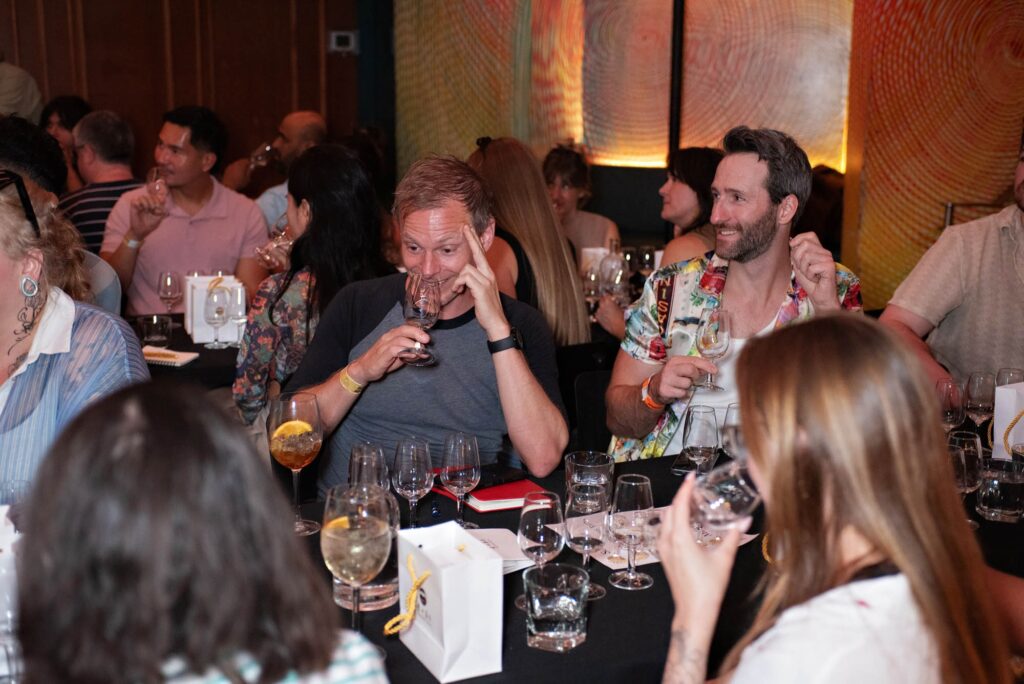
Sinocan Supply Inc. has long worked to build a setting where baijiu can be understood and discussed. Overseas, baijiu has often faced overlapping barriers of language, aroma, drinking habits and cultural background, and many consumers’ first impression may be simply “strong”, “unfamiliar” or “I don’t know how to drink it”. Through structured teaching, ingredient displays and progressive tasting, baijiu shifted from a distant category name to a drinking culture that can be observed up close, discussed and appreciated.
The masterclass also showed bartenders, bar professionals and drinks lovers baijiu’s versatility. The deeper the understanding, the clearer its possibilities in neat pours, food pairing, cocktail creation and cross-cultural dining experiences. The grainy, fermentative, floral-fruity, aged and lingering notes of different aroma styles bring richer inspiration to modern drinks creation, while knowledge of baijiu craft helps professionals tell more accurate, warmer stories when presenting the product.
More importantly, baijiu carries not only brewing technique but also the emotional bonds between Chinese people and grain, land, seasons, ritual and reunion. When sorghum, rice, qu and distillation were brought into the Toronto classroom, they were no longer just raw materials on a display table or terms in a slide deck, but media for cross-cultural communication. Through one glass, guests met a complex fermentation craft; through one aroma, they understood a long cultural tradition; through one face-to-face exchange, they saw new possibilities for Chinese baijiu in today’s international drinks world.
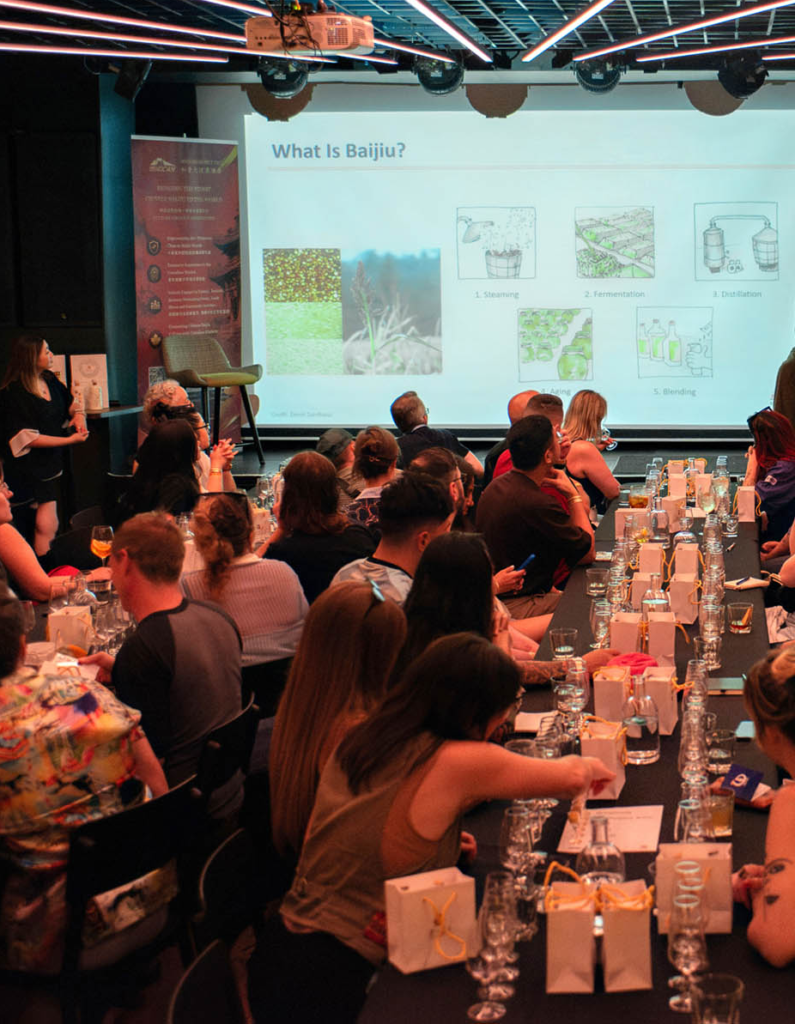
Going forward, Sinocan Supply Inc. will continue to use education, experience and cultural exchange as its bridge, bringing more professionals and consumers closer to Chinese baijiu. We believe baijiu’s journey to the world should rest not on product displays or price tags alone, but on real experience, professional knowledge and mutual understanding. The TOCC 2026 baijiu masterclass is a meaningful starting point — and an exchange about flavour, quality and culture.
A glass of baijiu connects tradition with the present; a tasting opens understanding and dialogue. Sinocan Supply Inc. looks forward to working with more industry partners and drinks lovers so that Chinese baijiu is tasted more seriously, told more accurately and appreciated more widely on the world stage.
